Technicians keep critical systems, like power, healthcare, and communications, running safely.
Careers in technical fields offer stability, growth, and strong salaries.
Without technicians, modern life as we know it would come to a halt.
From power grids to hospitals, technicians keep our world running. Discover why modern life depends on their skills.
You wake up to your smartphone alarm, check the weather app, and flip on the lights. The coffee maker starts brewing your morning cup while your car warms up in the garage.
By 7 AM, you've already relied on dozens of complex systems that require constant technical maintenance to function properly.
Most people never think about the skilled professionals who keep these systems running. Technicians work behind the scenes across countless industries. They’re why the technology we take for granted operates safely and reliably every single day.
From the fiber optic cables carrying your video calls to the medical equipment monitoring patients in hospitals, technicians are the backbone of our tech-driven and tech-dependent society.
Sometimes, it’s tough to grasp the full breadth of their expertise. For anyone thinking about joining the profession, it's important to understand its true value.
Let’s look at the parts of the world around us that wouldn’t exist without technicians.
Get the Inside Scoop on Booming Technician Careers – Free Webinar!
Curious about pay, work hours, and what a day in the life of a technician looks like? Watch the Techs of Tomorrow webinar for free for expert insights!
Employers We Have Worked With
Get the Inside Scoop on Booming Technician Careers – Free Webinar!
Curious about pay, work hours, and what a day in the life of a technician looks like? Download the Techs of Tomorrow webinar for free for expert insights!
Employers We Have Worked With
Get the Inside Scoop on Booming Technician Careers – Free Webinar!
Curious about pay, work hours, and what a day in the life of a technician looks like? Download the Techs of Tomorrow webinar for free for expert insights!
Employers We Have Worked With
Get the Inside Scoop on Booming Technician Careers – Free Webinar!
Curious about pay, work hours, and what a day in the life of a technician looks like? Download the Techs of Tomorrow webinar for free for expert insights!
Get the Inside Scoop on Booming Technician Careers – Free Webinar!
Curious about pay, work hours, and what a day in the life of a technician looks like? Download the Techs of Tomorrow webinar for free for expert insights!
Employers We Have Worked With
Want to Become an Amazon Maintenance Technician?
Contact us to learn the best pathways to launch your career, including training options, required skills, and job opportunities.
Get the Inside Scoop on Booming Technician Careers – Free Webinar!
Curious about pay, work hours, and what a day in the life of a technician looks like? Download the Techs of Tomorrow webinar for free for expert insights!
Employers We Have Worked With
Get the Inside Scoop on Booming Technician Careers – Free Webinar!
Curious about pay, work hours, and what a day in the life of a technician looks like? Download the Techs of Tomorrow webinar for free for expert insights!
Employers We Have Worked With
Get the Inside Scoop on Booming Technician Careers – Free Webinar!
Curious about pay, work hours, and what a day in the life of a technician looks like? Download the Techs of Tomorrow webinar for free for expert insights!
Employers We Have Worked With
1. The Internet and Global Communications
Every email, video call, and online transaction depends on physical infrastructure maintained by telecommunications technicians.
The internet isn't in the air. It's millions of miles of fiber optic cables, thousands of data centers, and countless networking devices requiring constant oversight.
Fiber Optic Network Technicians
These technicians are the backbone of modern communications. They splice optical fibers with precision measured in microns, test signal strength using sophisticated equipment, and troubleshoot network outages affecting millions of users.
There’s a rapidly increasing number of facilities housing the servers that power cloud computing, social media platforms, and digital commerce. With AI on the rise, there’s going to be many, many more.
These specialists monitor cooling systems, replace failed components, and maintain backup power systems, preventing catastrophic data loss during outages.
A World Without Technicians
Without telecommunications technicians, the digital economy would collapse overnight. Online banking, streaming services, remote work, and emergency communications all depend on their expertise to maintain the physical networks connecting our digital world.
2. Healthcare and Life-Saving Medical Equipment
Modern healthcare relies on sophisticated medical devices, from basic patient monitors to complex surgical robotics.
Biomedical Equipment Technicians ensure these critical systems operate safely and accurately when lives are at stake.
Critical Care Equipment Maintenance is one of the most demanding technician specializations. BMETs calibrate ventilators that help critical patients breathe, test the defibrillators used in cardiac emergencies, and maintain infusion pumps delivering precise medication dosages.
Medical Imaging Systems require specialized expertise to produce diagnostic images that doctors rely on for accurate diagnoses. BMETs perform routine calibration on MRI machines, CT scanners, and X-ray equipment to ensure imaging accuracy.
The Bureau of Labor Statistics reports that biomedical equipment technicians earn a median annual salary of $62,630, reflecting the specialized knowledge required for this role. The job growth for the next 10 years is projected to be 13%, which is significantly faster than average.
A World Without Technicians
A single calibration error could mean the difference between life and death, making their precision and attention to detail literally life-saving. Without biomedical technicians, hospitals would struggle to maintain the complex relationship between technology and clinical care.
We help people like you find new careers they love!
Contact us for a free consultation to begin your new career journey.
3. Manufacturing and Industrial Production
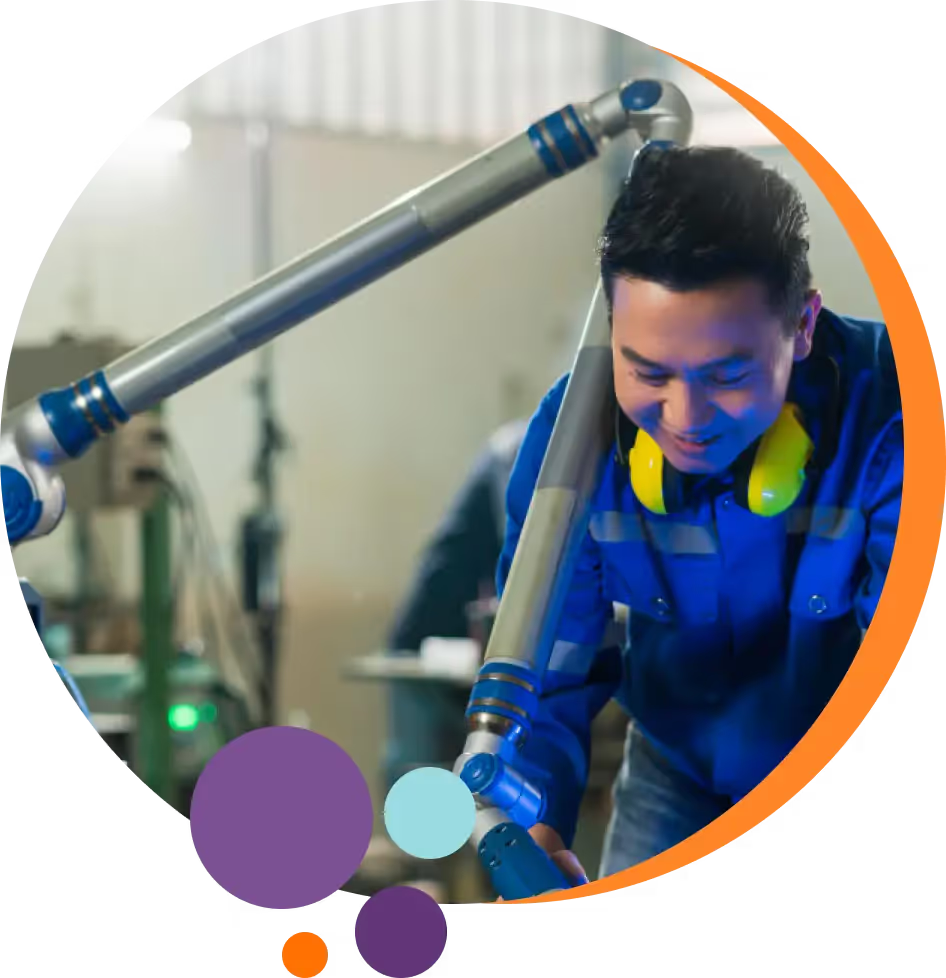
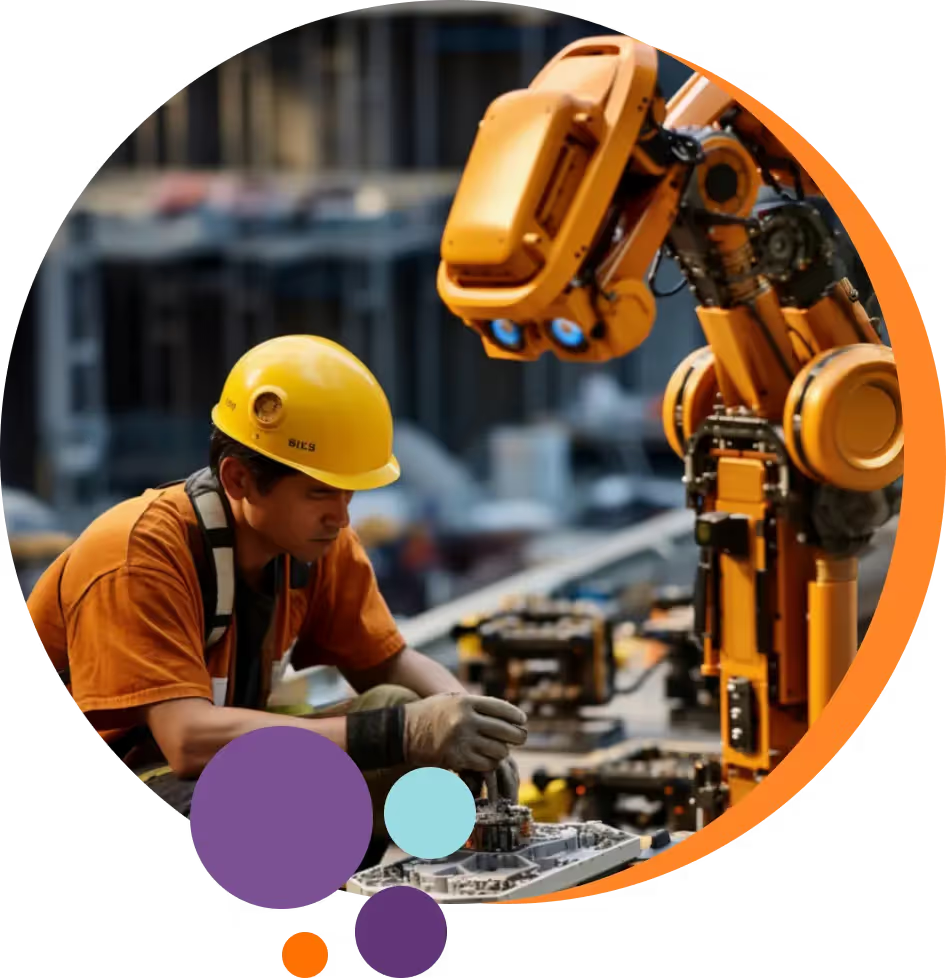
Modern manufacturing relies on sophisticated automation, robotics, and precision machinery requiring constant technical oversight to maintain production efficiency and quality.
Industrial maintenance workers keep the factories that produce everything from automobiles to consumer electronics running.
Industrial Maintenance Technicians
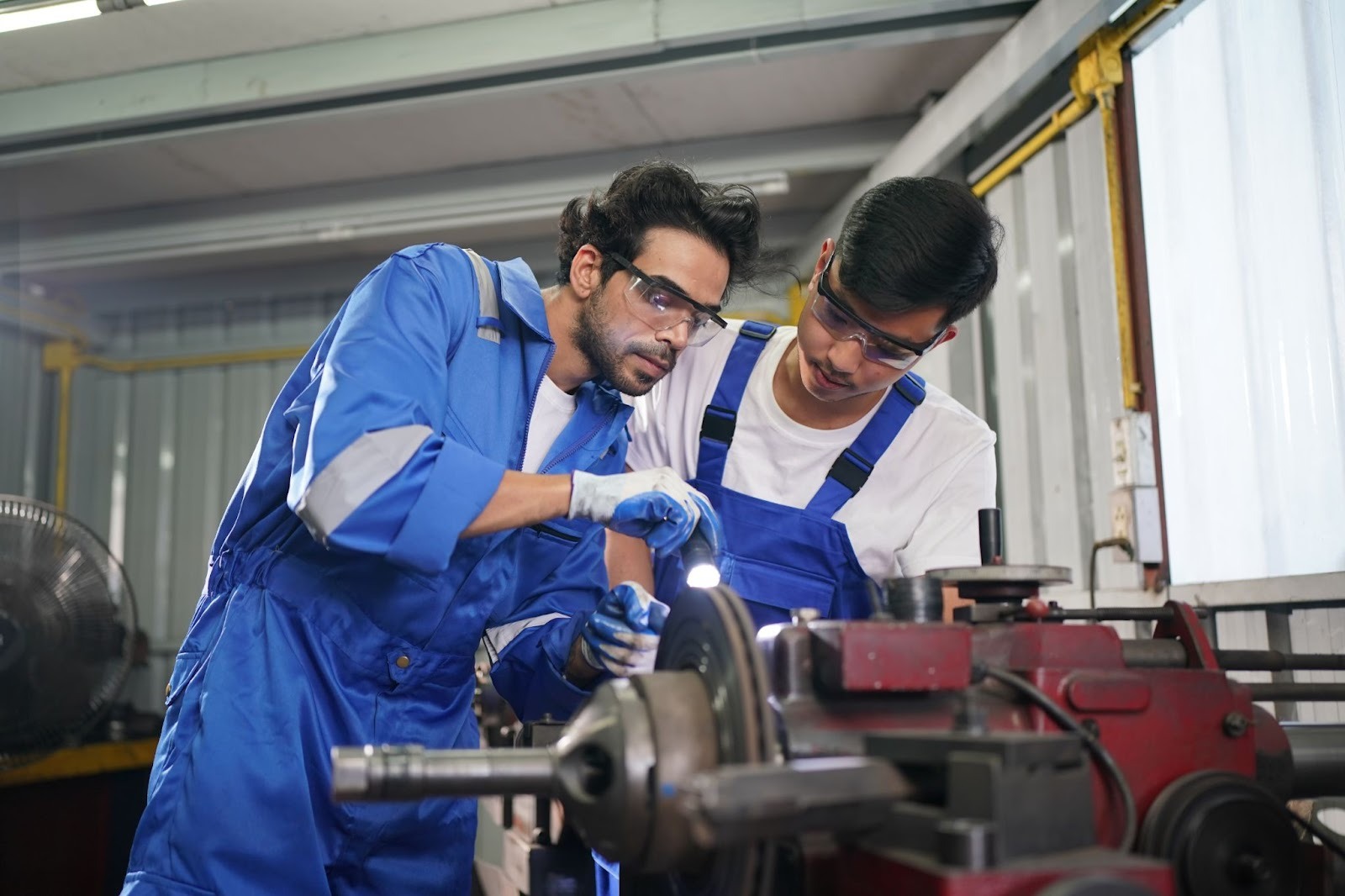
These maintenance technicians diagnose machine problems, replace defective parts, and conduct performance tests on complex automated systems.
Their responsibilities can include electrical systems, hydraulics, pneumatics, and computerized control systems. They must understand complex machinery, read technical schematics, and work with both mechanical and electronic components.
Assembly Line Technicians
Assembly line technicians are critical, ensuring manufacturing quality and efficiency in production facilities worldwide.
These specialists operate computerized manufacturing equipment, monitor quality control systems, and troubleshoot production issues that could halt entire assembly lines.
A World Without Technicians
Imagine if everything around you that’s produced in a factory disappeared.
That’s what might happen without industrial maintenance technicians. All manufacturing would grind to a halt. To make the same products without manufacturing would multiply their costs by shocking amounts. They would either be prohibitively expensive or entirely unavailable.
Technicians ensure that the complex machinery producing all these goods for global markets operates reliably and efficiently.
4. Power Generation and Electrical Infrastructure
Every time you flip a light switch or charge a device, you depend on electrical grid infrastructure maintained by power systems technicians. The U.S. electrical grid is an engineering marvel with more than 9,200 electric generating units connected to over 600,000 miles of transmission lines.
However, aging infrastructure creates ongoing challenges. Many power transmission lines and transformers are decades old, requiring constant maintenance to maintain grid reliability.
Power Plant Technicians
These technicians operate and maintain facilities generating electricity for entire regions. They monitor control systems in nuclear, coal, gas, and renewable energy facilities, ensuring safe and efficient power generation.
Smart Grid Technicians
A newer specialty, smart grid experts work with advanced technologies to transform how electricity is generated, distributed, and consumed.
They install smart meters that provide real-time usage data, maintain automated switching systems that reroute power during outages, and configure communication networks enabling grid optimization.
Grid modernization creates opportunities for technicians skilled in both traditional electrical systems and emerging technologies. These systems require professionals who understand electrical engineering principles and computer networking.
A World Without Technicians
It’s not an exaggeration to say that without power systems technicians, modern civilization would cease to function.
Their expertise is behind the reliable electricity supply powering homes, businesses, hospitals, and essential infrastructure.
5. HVAC Systems and Climate Control
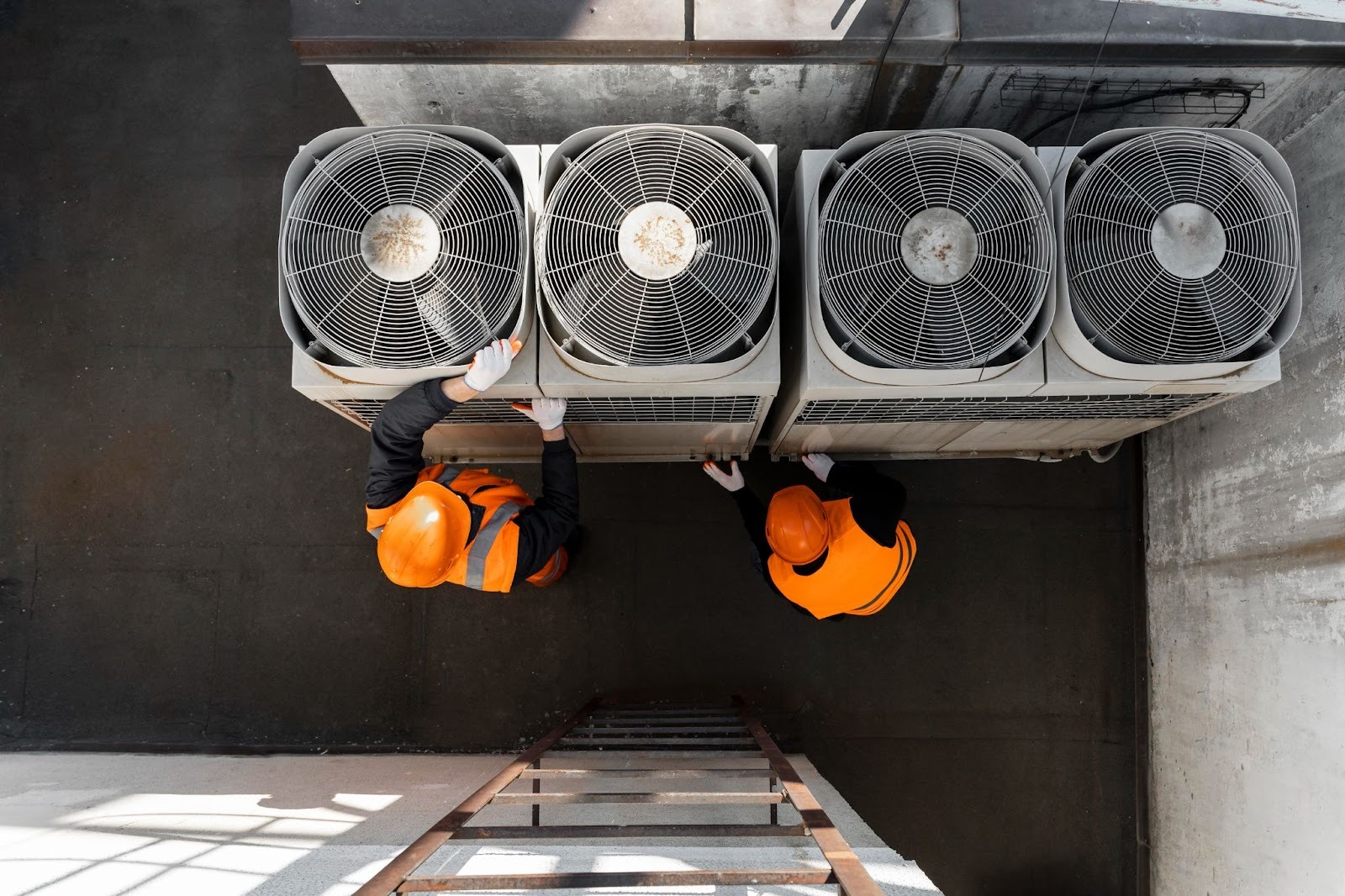
Modern buildings require sophisticated heating, ventilation, and air conditioning systems to maintain comfortable, healthy indoor environments. HVAC technicians ensure these complex systems operate efficiently while managing energy consumption and indoor air quality.
Their roles can be broken down into two broad categories.
Commercial HVAC Technicians
Commercial HVAC technicians manage climate control systems in large buildings where failures can affect thousands of occupants.
High-rise buildings present different challenges. For instance, different temperature zones require sophisticated control systems.
Residential HVAC Technicians
Most people are familiar with residential HVAC technicians. They’re the ones who install and maintain home comfort systems. Nowadays, these are often integrated with smart home technology.
Modern systems include programmable thermostats, zone control systems, and energy-efficient equipment requiring technical expertise to install and troubleshoot.
HVAC Technician Careers
The Bureau of Labor Statistics projects that employment of HVAC technicians will grow 8% from 2024 to 2034, which is faster than the average for all occupations.
The job demands are physically challenging but rewarding.
HVAC technicians work in various environments and must be comfortable lifting heavy equipment and working in tight spaces. However, the career offers strong job security as buildings will always require climate control systems.
A World Without Technicians
Without HVAC technicians, modern buildings would be uninhabitable during extreme weather, and indoor air quality would deteriorate to dangerous levels.
6. Water Treatment and Public Safety
Safe drinking water and effective wastewater treatment are basic requirements for public health and environmental protection.
Water treatment technicians operate complex systems that ensure communities have access to clean water and proper sanitation.
Water Treatment Plant Technicians
At treatment plants, these technicians work around the clock to ensure drinking water meets strict safety standards. They monitor chlorine levels for disinfection, test for bacterial contamination, and operate filtration systems removing particles and chemical contaminants.
Wastewater Treatment Technicians
Managing the systems processing sewage and industrial wastewater, these technicians ensure that the water returned to the environment is safe.
They operate biological treatment processes, manage sludge removal systems, and ensure treated effluent meets environmental discharge standards.
A World Without Technicians
Their work directly impacts public health. Contaminated water supplies can cause widespread illness or even death, making precise monitoring and treatment crucial for community safety.
Without water treatment technicians, communities would lack access to safe drinking water and effective sanitation, creating public health crises and environmental disasters.
7. Transportation and Vehicle Safety
Modern vehicles integrate mechanical, electrical, and computer systems, which require specialized technical expertise to maintain safety and reliability.
Automotive technicians ensure millions of vehicles operate safely on roads worldwide.
Automotive Service Technicians
These technicians diagnose and repair increasingly complex vehicle systems.
Modern cars integrate advanced driver assistance systems, hybrid and electric powertrains, and computerized engine management. In 2023, nearly 1 in 5 new cars sold were electric vehicles, another critical specialization.
Their work today requires both mechanical aptitude and electronic troubleshooting skills.
Heavy Equipment Technicians
Heavy Equipment Technicians maintain the trucks, buses, and commercial vehicles that transport goods and people. These vehicles operate under demanding conditions and require preventive maintenance to avoid breakdowns that could strand passengers or delay critical deliveries.
Automotive Technician Careers
According to the Bureau of Labor Statistics, automotive service technicians and mechanics earn a median annual wage of $49,670, requiring only minimal on-the-job training. However, their earning potential increases when they work on more complex vehicles. Their skills are also often transferable to other careers.
The shift toward electric and autonomous vehicles creates new opportunities for technicians skilled in high-voltage electrical systems, battery management, and sensor calibration.
These emerging technologies require specialized training, but offer excellent career prospects.
A World Without Technicians
Without automotive technicians, vehicle safety would decline dramatically, leading to increased accidents, breakdowns, and transportation system failures.
Eventually, using vehicles in daily life wouldn’t be feasible.
8. Food Safety and Processing Systems
Modern food production relies on sophisticated processing equipment, quality control systems, and safety monitoring.
Food Processing Technicians
Food Processing Technicians operate and maintain the automated systems behind processing, packaging, and preserving food products.
They monitor temperature controls in pasteurization systems, calibrate metal detectors that identify contamination, and ensure filling and packaging equipment meets strict hygiene standards.
Quality Control Technicians
These technicians must test food samples for bacterial contamination, verify products meet nutritional specifications, and ensure compliance with FDA regulations.
Their work prevents foodborne illness outbreaks affecting thousands of consumers.
Refrigeration Technicians
Cold storage systems are essential for food safety from production through retail distribution. Refrigeration Technicians service walk-in freezers, truck refrigeration systems, and display cases. They maintain precise temperatures to prevent spoilage and bacterial growth.
A World Without Technicians
The FDA estimates that foodborne diseases affect 48 million Americans annually.
We need technicians to maintain food safety standards, prevent contamination, and ensure public health. Without food processing technicians, the modern food supply chain would collapse, leading to widespread spoilage, safety hazards, and public health crises.
The Future Belongs to Skilled Technicians
These examples represent just a fraction of the industries and systems that depend on skilled technicians. From the moment you wake up to the time you fall asleep, your daily life is enabled by technicians working around the clock to maintain our technological civilization.
As systems become more sophisticated and integrated, demand for skilled technicians continues to grow. Generations of technicians are retiring while new technology expands, creating unprecedented opportunities for those willing to develop technical skills.
Job Security: Essential infrastructure and technology always require maintenance and troubleshooting. These roles resist automation because they require human judgment, manual dexterity, and problem-solving skills that machines cannot replicate.
Competitive Pay: Median salaries often exceed those of many college graduate positions, especially when considering the lower educational debt load required for technician training.
Career Growth: Multiple advancement pathways exist from specialist roles to management positions, with opportunities for continuous skill development and specialization.
Immediate Impact: Technicians contribute directly to systems supporting entire communities, providing meaningful work that makes a visible difference in people's lives.
Continuous Learning: Technological evolution ensures the work remains intellectually challenging, with new systems and methods requiring ongoing skill development.
Ready to Join the Workforce That Runs The World?
As a technician, dozens of specializations and pathways lead to meaningful, well-paying work. Their careers are always a great combination of hands-on problem-solving and sophisticated technology.
The world needs more skilled technicians to maintain and improve the systems that define modern civilization.
Whether you're interested in industrial maintenance, biomedical technology, or infrastructure systems, skilled technicians understand both traditional principles and emerging technologies.
Unmudl can help you get started and become job-ready.
Why choose Unmudl for your technical training:
Industry-Relevant Skills: Courses designed with employer input to match real job requirements across multiple technical fields.
Flexible Online Format: Learn at your own pace while maintaining current work and family commitments.
Hands-On Experience: Virtual labs and practical exercises prepare you for real-world technical challenges.
Direct Career Pathways: Training connects directly to job opportunities with growing employers.
The next time you flip a switch, send a text, or breathe clean air, remember that none of it would be possible without technicians.
Explore our career-ready "Mechatronics and Robotics Maintenance" designed with employers to help you get hired faster. Train for industrial maintenance in ~10–12 weeks, earn a certificate and get ready to interview for technician roles.



.svg)